
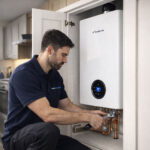
The Ideal boiler L1 fault code signals a flow temperature overheat or lack of water circulation issue. Your boiler has shut down safely to prevent damage because it has detected that water is not flowing properly or the temperature is too high.
Common high-level causes include low system pressure, a problem with the central heating pump, air in the pipes, or a faulty temperature sensor.
If you live in the North West, Yorkshire, or the Midlands and your Ideal boiler has started showing this error, you are not alone. Many homeowners and landlords across these regions contact us at Clever Energy Boilers for help with recurring heating problems.
Understanding the Ideal boiler L1 fault code can help you take the right steps quickly and avoid unnecessary discomfort during colder months.

What Does the Ideal Boiler L1 Fault Code Mean?
The Ideal L1 fault code means your boiler has detected either insufficient water flow through the system or that the flow temperature has become too high. In simple terms, the water is not circulating as it should, causing the boiler to overheat and lock out as a safety measure.
This prevents potential damage but leaves you without heating or hot water until the underlying issue is resolved. The L1 error code appears on models like the Ideal Logic range and is one of the more frequent faults seen on Ideal boilers.
What Causes the Ideal Boiler L1 Error Code?
Several issues can trigger the L1 error code on an Ideal boiler. Most relate to poor water circulation or incorrect temperature readings. The most common reasons include low water pressure, problems with the central heating pump, airlocks or blocked valves, and faulty temperature sensors. Sludge or limescale buildup in older systems can also contribute.
Addressing these promptly can restore your heating and potentially extend the life of your current boiler.
Low Water Pressure in the System
Low water pressure is one of the simplest yet most frequent triggers for the L1 fault code on an Ideal boiler. When pressure drops below the recommended level (usually 1 to 1.5 bar), water does not circulate effectively, causing the boiler to overheat and display the error.
This often happens gradually due to small leaks, air entering the system, or after bleeding radiators. In hard water areas common across parts of the Midlands and North West, mineral deposits can worsen pressure issues over time.
How to Fix
- Check the pressure gauge on your boiler. It should read between 1 and 1.5 bar when the system is cold.
- If low, locate the filling loop (usually a flexible silver hose under the boiler) and slowly open the valves to top up the pressure until it reaches the correct level.
- Close the valves, check for leaks, and press the reset button on the boiler.
- Monitor the pressure over the next few days. If it drops again, there may be a hidden leak that needs professional attention.
- If you are unsure about the process, contact a Gas Safe engineer straight away to avoid over-pressurising the system.
Faulty or Seized Central Heating Pump
The central heating pump circulates water around your radiators and boiler. When it becomes weak, seized, or blocked with debris, water flow reduces dramatically, leading to the L1 fault code. This is especially common in boilers over 10 years old.
A dirty or failing pump forces the boiler to work harder, raising temperatures and triggering the safety lockout.
How to Fix
- Listen for unusual noises from the pump area when the heating is on. A humming sound without proper circulation can indicate a seized pump.
- Check that all isolation valves under the boiler and radiator valves are fully open.
- Try bleeding radiators to remove any air that might be affecting flow.
- If the pump does not respond, it may need cleaning, freeing, or replacement. This requires a qualified Gas Safe engineer.
- After any work, reset the boiler and test the heating system thoroughly.
Airlocks or Closed/Blocked Radiator Valves
Air trapped in the pipes or closed radiator valves restricts water flow, causing localised overheating and the L1 error. Sludge buildup from untreated systems can also block pipes and valves, a frequent issue in older properties across Yorkshire and the North West.
How to Fix
- Ensure all radiator valves are fully open.
- Bleed each radiator starting from the lowest in the house, working upwards, to release trapped air.
- Check for cold spots on radiators, which indicate blockages.
- If bleeding does not help, a power flush may be needed to clear sludge and debris.
- Have a professional inspect and balance the system to ensure even flow throughout your home.
Faulty Temperature Sensor (Thermistor)
The thermistor is a small sensor that tells the boiler the temperature of the water. If it fails or gives incorrect readings, the boiler assumes there is a flow or overheat problem and displays the L1 error.
This component can wear out over time or become affected by wiring issues.
How to Fix
- Reset the boiler and see if the fault clears temporarily.
- Do not attempt to replace the thermistor yourself as it involves electrical and gas components.
- Call a Gas Safe registered engineer to test the sensor with proper diagnostic tools.
- Replacement is usually straightforward for a professional and can quickly resolve the error.
- Combine this with a full service to check related components.
When to Consider a New Boiler Instead of Repeated Repairs?
Persistent L1 fault codes on your Ideal boiler often point to a system that is nearing the end of its reliable life. Many combi boilers keep running past 10 years, but by around 8 years old efficiency has usually dropped and faults become more common. If your boiler is over 8 years old, a new boiler is often the better option than paying £100 to £500 a visit for repairs.
For homeowners and landlords in the North West, Yorkshire, and Midlands, investing in a modern, efficient boiler can bring better reliability, lower running costs, and peace of mind.
At Clever Energy Boilers, we specialise in expert boiler installation across these regions, helping families and property owners upgrade to quieter, more efficient models that reduce the chance of frustrating fault codes like L1.
Request a free, no-obligation boiler quote and take the first step towards dependable home heating. Our local engineers are ready to help you stay warm and comfortable all year round.
Frequently Asked Questions
Can the Ideal boiler L1 fault code cause permanent damage if ignored?
Ignoring the L1 fault code for long periods risks overheating components inside the boiler, which can lead to more expensive repairs or even the need for a full replacement. It is best to address the issue promptly to protect your heating system.
How much does it typically cost to repair an Ideal boiler L1 fault in the UK?
If your boiler is over 8 years old, a new boiler is usually the better option than paying for repairs. Older boilers are usually less efficient and more likely to develop further faults. A Gas Safe registered engineer’s repair bill varies with the cause, from under £200 for simple jobs to more for a new pump. For a fixed price on a new boiler, get a free online quote.
Will a system power flush fix recurring L1 fault codes?
Yes, a power flush often resolves L1 errors caused by sludge or debris by restoring proper water flow. It is particularly effective in older systems and can improve overall efficiency when combined with inhibitor treatment.
Is the L1 fault more common in certain Ideal boiler models?
The L1 code appears more frequently on older Logic and Combi models, especially those over 8-10 years old. Regular servicing helps reduce the likelihood across all Ideal ranges.
Should landlords prioritise boiler replacement after multiple L1 faults?
Landlords should consider replacement if faults keep returning, as it ensures compliance with safety and efficiency standards for tenants. A new boiler also reduces the risk of emergency call-outs during tenancy periods.