
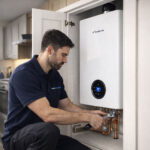
A faulty diverter valve on a boiler is most commonly caused by wear and tear over time, limescale buildup, debris or sludge in the system, a stuck or seized valve, or a faulty internal seal.
These issues stop the valve from directing hot water properly between your radiators and taps, leaving you with cold radiators, lukewarm water, or no heating at all.
If any of this sounds familiar, you are in the right place. Below, we walk you through everything you need to know, from what is causing the problem to how to fix it and prevent it from happening again.

What Causes A Faulty Diverter Valve On A Boiler?
A faulty diverter valve on a boiler is typically the result of mechanical wear, water quality issues, or blockages that build up over time. Here are the most common causes in detail.
Wear And Tear Over Time
Wear and tear is one of the leading causes of a faulty diverter valve on a boiler. Like any moving part inside your boiler, the diverter valve is operated repeatedly every time you switch between heating and hot water.
Over months and years, this constant movement causes the internal components to degrade, meaning the valve no longer opens and closes as cleanly as it should.
You might notice this as a gradual decline in performance, for example your radiators taking longer to heat up, or your hot water not being as hot as it used to be.
How To Fix
- Contact a Gas Safe registered engineer to inspect the diverter valve.
- The engineer will confirm whether the valve has worn beyond repair.
- If worn, the faulty diverter valve will need to be replaced with a compatible new part.
- Once replaced, the engineer will test the system to ensure heating and hot water are working correctly.
- Ask about a service plan to keep the boiler in good health going forward.
Limescale Buildup
Limescale buildup is a very common cause of diverter valve problems, particularly for homeowners in hard water areas across the UK, including parts of the Midlands and Yorkshire. When hard water flows through your boiler, it leaves behind calcium and magnesium deposits that gradually coat internal components.
Over time, this limescale can cause the diverter valve to stick in one position, meaning it either stays in heating mode or hot water mode and cannot switch between the two.
A common sign of this is having plenty of hot water at the taps but stone cold radiators, or the opposite scenario.
How To Fix
- Have a Gas Safe engineer assess the extent of the limescale inside the boiler.
- A descaling agent or chemical flush may be used to break down limescale deposits.
- If the valve is too badly scaled, replacement will be recommended.
- Consider having a scale reducer or water softener fitted to prevent the issue from returning.
- A magnetic system filter can also be installed to reduce mineral deposits circulating through the system.
Sludge And Debris In The System
Sludge and debris in the central heating system is another frequent cause of diverter valve failure. Over time, corrosion inside your radiators and pipework produces a dark, muddy substance known as magnetite sludge.
This sludge circulates through the system and can clog the diverter valve, preventing it from moving freely or blocking the flow of water through it entirely.
This is especially common in older heating systems that have never had a power flush or had a magnetic filter installed.
How To Fix
- Book a power flush with a qualified heating engineer to remove sludge from the system.
- The engineer will clean the diverter valve or replace it if it has been damaged by debris.
- After flushing, a magnetic filter such as a Fernox or Adey MagnaClean should be fitted to catch future debris.
- Add central heating inhibitor fluid to the system to slow down future corrosion.
- Schedule annual boiler services to keep the system clean and catch buildup early.
A Stuck Or Seized Valve
A stuck or seized diverter valve is exactly what it sounds like. The valve gets lodged in one position and simply will not move. This can happen as a result of the valve not being used in a particular mode for a long period of time, or due to a combination of limescale and corrosion causing it to seize up completely.
Homeowners often notice this during seasonal changes, for example when they switch the heating back on in autumn after a warm summer, only to find the system will not respond properly.
How To Fix
- Do not attempt to force the valve yourself, as this can cause further damage.
- Call a Gas Safe registered engineer to diagnose the stuck valve.
- The engineer may attempt to free the valve manually if it is safe to do so.
- In most cases, a seized valve will need to be replaced rather than repaired.
- Ask the engineer to check the rest of the system for related issues that may have contributed to the seizure.
A Faulty Or Damaged Internal Seal
A faulty internal seal inside the diverter valve can cause water to leak past the valve rather than being directed where it should go. When the seal deteriorates, the boiler loses the ability to properly control water flow, which leads to poor heating performance, fluctuating water temperatures, or both heating and hot water running simultaneously at reduced efficiency.
Seals naturally degrade over time, but the process is accelerated by high water pressure, overheating, or poor water quality.
How To Fix
- A Gas Safe engineer will need to inspect the internal components of the diverter valve.
- If the seal is the issue, some valve types allow the seal alone to be replaced without replacing the entire valve.
- However, in many modern combi boilers, the full valve assembly is replaced as a single unit.
- Once repaired or replaced, the engineer should check the system pressure and water flow to ensure everything is operating correctly.
- Regular boiler servicing can catch seal degradation before it leads to a full breakdown.
How to Prevent Diverter Valve Issues
Preventing diverter valve problems comes down to regular maintenance and being proactive about your heating system’s health. Follow these steps to keep your boiler running smoothly for longer.
- Book an annual boiler service with a Gas Safe registered engineer every year without fail.
- Have a magnetic system filter fitted to capture sludge and debris before it reaches the valve.
- Use central heating inhibitor fluid and top it up during your annual service.
- If you live in a hard water area, consider fitting a scale reducer or inline water softener.
- Bleed your radiators regularly to keep the system balanced and reduce strain on internal components.
- Do not ignore early warning signs such as lukewarm water or slow heating, as catching the problem early is almost always cheaper than a full repair.
- Consider upgrading to a new, modern boiler if yours is over 10 to 12 years old, as older boilers are far more prone to diverter valve and other internal failures.
Is It Time For A New Boiler? Here Is What Clever Energy Boilers Can Do For You
If your diverter valve has failed more than once, or if your boiler is getting on in years, repairing the valve may only be a short term fix. Older boilers are more prone to recurring faults, and the cost of repeated repairs can quickly add up to more than the price of a brand new, energy efficient replacement.
At Clever Energy Boilers, we provide expert boiler installation services across the North West, Yorkshire, and the Midlands. Whether you are a homeowner in Manchester, Leeds, Birmingham, or anywhere in between, our team of Gas Safe registered engineers can help you find the right boiler for your home and budget, and get it installed quickly and professionally.
Get your free, no obligation boiler quote today from Clever Energy Boilers and take the first step towards reliable, efficient heating in your home.
Frequently Asked Questions
Can I Still Use My Boiler If The Diverter Valve Is Faulty?
In some cases, yes, but with reduced functionality. If the valve is stuck in one position, you may still have either hot water or heating, but not both. It is not recommended to leave the fault unattended for long, as continuing to run the boiler with a faulty component can put additional strain on other parts and lead to a more costly breakdown.
How Long Does A Diverter Valve Last?
A diverter valve typically lasts between 10 and 15 years, though this can vary depending on water quality, how often the boiler is used, and how well the system has been maintained. Regular servicing significantly extends the lifespan of internal components like the diverter valve.
How Much Does It Cost To Replace A Diverter Valve In The UK?
The cost to replace a diverter valve in the UK typically ranges from £150 to £350, including parts and labour. The price varies depending on your boiler make and model, your location, and the engineer’s rates. For older boilers where parts are harder to source, the cost can be higher, which is why many homeowners opt for a full boiler replacement instead.
Will A New Boiler Eliminate Diverter Valve Problems?
A brand new boiler comes with all new internal components and a manufacturer’s warranty, so yes, diverter valve issues will not be a concern for a number of years. Keeping up with annual servicing and fitting a magnetic filter will help maintain the new boiler and reduce the risk of future valve problems.
Is A Faulty Diverter Valve Covered By My Boiler Warranty?
This depends on the age of your boiler and the terms of your warranty or boiler cover plan. Most manufacturer warranties cover internal component failures, including the diverter valve, for the duration of the warranty period, provided the boiler has been serviced annually by a qualified engineer.
If your boiler is out of warranty, a boiler cover plan from a reputable provider may cover the cost of repairs.
