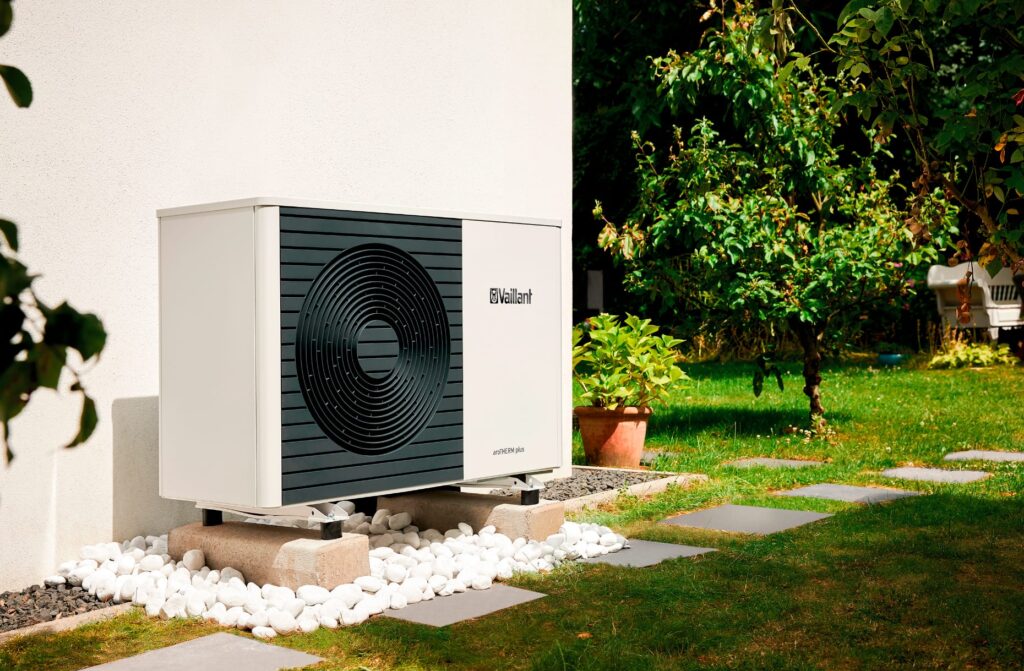
The main difference is where the heat goes. An air-to-air heat pump blows warm air straight into a room through a wall-mounted unit, and it can cool in summer too. An air-to-water heat pump heats water that runs through your radiators or underfloor heating, and it heats your hot water cylinder as well. Air-to-air is cheaper and quicker to fit for a few rooms. Air-to-water is the whole-house option that replaces a boiler.
We fit both types from our base in Bingley, so here’s an honest side-by-side to help you work out which suits your home.
Air-to-air vs air-to-water at a glance
| Air-to-air heat pump | Air-to-water heat pump | |
|---|---|---|
| How it heats | Warm air from indoor wall units | Hot water through radiators or underfloor heating |
| Hot water | No | Yes, via a cylinder |
| Cooling | Yes | Not on most standard systems |
| Typical installed cost | £1,600 to £2,800 for one room, £3,200 to £6,500 for two or three | Often £10,000 or more for a whole house |
| Boiler Upgrade Scheme grant | £2,500 | £7,500 (plus £1,500 until March 2027 for oil or LPG homes) |
| Space needed | Outdoor unit and slim indoor units | Outdoor unit plus room for a hot water cylinder |
| Installation time | Often one day for a single room | Usually several days |
| Best for | Flats, electrically heated homes, extensions, lofts, rooms that need cooling | Houses replacing a gas, oil or LPG boiler |
Which is cheaper to install?
Air-to-air, by a long way. A single-room system usually costs £1,600 to £2,800 fitted, because there’s no cylinder, no new radiators and no changes to your pipework. An air-to-water system is a bigger job. Radiators often need upsizing to work at lower flow temperatures, and a new hot water cylinder usually goes in, so whole-house costs regularly pass £10,000 before the grant. The £7,500 grant closes a lot of that gap, but air-to-air still tends to come out cheaper upfront for a smaller home.
Which is cheaper to run?
Both are efficient, and for heating rooms the running costs can be similar. A good air-to-air unit often has a heating SCOP of 4 or more, so it delivers around 4kWh of heat per 1kWh of electricity. Air-to-water systems reach similar figures when the radiators are sized to run at low temperatures, but efficiency drops when they have to run hotter, and heating hot water costs a little more than heating air.
With electricity at 26.32p per kWh under the October to December 2026 price cap, a SCOP of 4 works out at roughly 6.6p for each kWh of heat. That’s below the cost of heat from a 90% efficient gas boiler at 7.97p per kWh of gas, which comes to around 8.9p, and a quarter of the cost of plain electric heaters. Our guide to how air-to-air heat pumps work includes a full running cost example.
Can an air-to-air heat pump replace my boiler?
Only partly, in most houses. It can take over room heating, but it won’t make hot water for your taps and showers, so you’d still need a boiler, an electric immersion or another water heater. In a flat or a small home that already uses an electric shower and immersion, that’s often fine. In a three-bedroom house with a combi boiler, an air-to-water heat pump is the more complete replacement.
Which is better for a flat?
Air-to-air, nearly every time. Most flats have no room for a hot water cylinder and some have no wet central heating at all, which rules out most air-to-water systems. A wall-mounted unit in the living room and one in the bedroom on a single outdoor unit covers most flats neatly, and in England the outdoor unit can usually go in under permitted development rules if it meets the noise limits. Leasehold flats may need the freeholder’s permission, so it’s worth checking your lease first.
Which is better for an older stone house?
It depends on the house. Many stone terraces around Bradford, Keighley and Halifax lose heat through solid walls, and an air-to-water system there usually needs bigger radiators to keep the home warm at low flow temperatures. Air-to-air units warm a room quickly, which suits rooms you use at set times, like a lounge in the evening or a home office. For steady background heat through the whole house, air-to-water with properly sized radiators usually works better. We look at the heat loss for each room during the survey before recommending either.
Can I have both?
Yes, but the Boiler Upgrade Scheme only pays one grant per property, so you can’t claim for both. A common setup is a gas boiler or air-to-water heat pump for the whole house, plus an air-to-air unit in a loft room, extension or bedroom that needs cooling in summer.
Air-to-air or air-to-water: which should I choose?
Choose air-to-air if you live in a flat or a small home, you’re on electric heating, you want cooling, or you only need to heat a few rooms. Choose air-to-water if you want to replace your boiler entirely and keep hot water from the same system. If you’re still unsure, request a free quote and we’ll recommend the right option for your home. You can also see our air-to-air and air conditioning installations or our pick of the best air source heat pumps.