It’s one of the most common mix-ups we hear, and the short answer is that in most cases they’re the same thing. A modern wall-mounted split air conditioner that can switch between cooling and heating is an air-to-air heat pump. The name changes depending on what you mainly use it for. Where they differ is with cooling-only units and portable air conditioners, which aren’t heat pumps in any useful sense and don’t qualify for the same grants, VAT relief or planning rules.
We install reversible split systems across Yorkshire, the North West and the Midlands, and this question comes up on almost every survey. Here’s how to tell what you’re actually buying and why it matters.
Is air conditioning the same as an air-to-air heat pump?
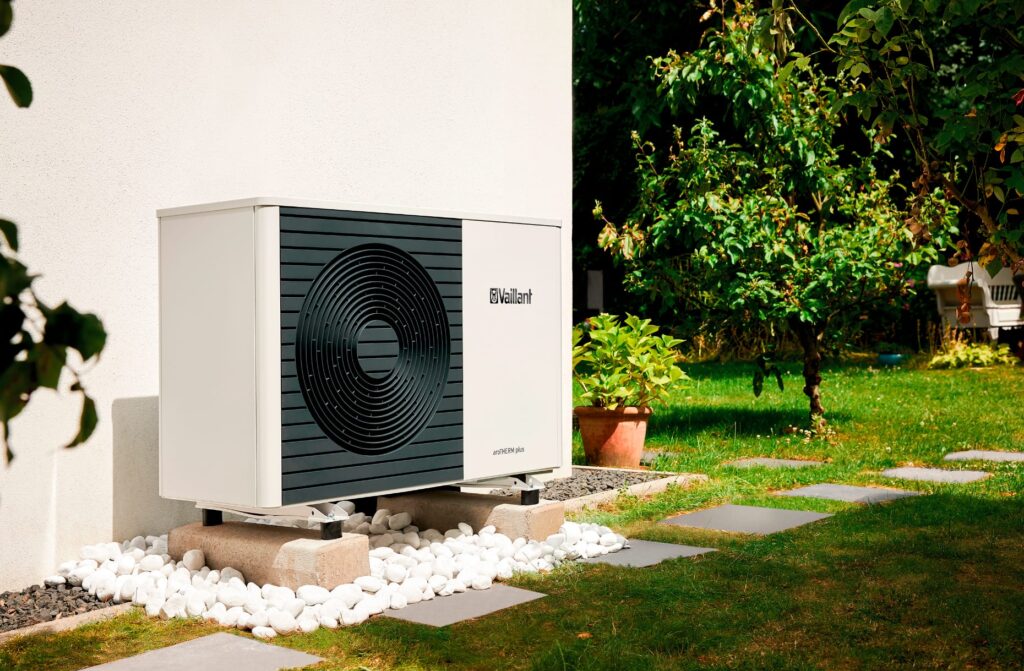
A reversible split air conditioner is an air-to-air heat pump. Both use an outdoor unit, refrigerant pipework and an indoor wall unit, and both move heat rather than making it. In cooling mode, the system takes heat out of the room and releases it outside. In heating mode, it runs in reverse, collecting heat from the outdoor air and releasing it indoors. HMRC’s guidance on VAT says the same thing in plainer terms: most air conditioning units are air source heat pumps.
The phrase “air conditioning” stuck because these units were first sold in the UK for cooling offices and shops. “Air-to-air heat pump” has become more common as people use them to heat homes, especially since they became eligible for the Boiler Upgrade Scheme.
Why do so many people think they’re different?
Mostly because of how they’re sold. Air conditioning is marketed for hot summers, and heat pumps are marketed as a boiler replacement, so it’s easy to assume they’re two separate products. These are the mix-ups we hear most often:
- “Air con only cools.” Most fitted split units sold today heat as well, and they do it very efficiently. You switch modes on the remote or app.
- “A heat pump is a big box that feeds the radiators.” That’s an air-to-water heat pump. An air-to-air heat pump has a smaller outdoor unit and heats the room directly through a wall unit, with no radiators involved. Our air-to-air vs air-to-water guide explains the difference.
- “Air con is expensive to run.” Cooling a room usually costs pennies an hour, and in heating mode a good unit costs less per unit of heat than a gas boiler.
- “You can’t get grants for air con.” You can’t get one for cooling-only or portable units. A fixed reversible system that replaces your existing heating can get the £2,500 heat pump grant.
So if you’ve been quoted for “air conditioning” and you also want heating, you might be looking at exactly the same unit as someone quoted for an “air-to-air heat pump”. What matters is the model, its heating rating and how it’s installed.
What’s the difference between them?
The differences come down to the type of unit and how it’s set up:
| Reversible split (air-to-air heat pump) | Cooling-only air conditioner | Portable air conditioner | |
|---|---|---|---|
| Heats the room | Yes, efficiently | No | Some do, usually less efficiently |
| Cools the room | Yes | Yes | Yes, with a hose out of the window |
| Fixed installation | Yes | Yes | No |
| Can qualify for the £2,500 grant | Yes, if the product and installer are MCS-certified | No | No |
| 0% VAT on installation in homes (until 31 March 2027) | Yes | No | No |
| Permitted development in England | Yes, within noise and size limits | Check with your council | Not needed |
| Noise indoors | Very quiet | Very quiet | Noticeably louder |
Does every air conditioner qualify for the heat pump grant?
No. To get the £2,500 Boiler Upgrade Scheme grant, the system has to be a fixed air-to-air heat pump that meets the scheme’s efficiency and noise standards, and it has to be fitted by an MCS-certified installer. It also has to replace your existing fossil fuel or electric heating, so adding a unit purely for summer cooling won’t qualify. Our air-to-air heat pump grant guide covers the full eligibility rules.
How do I check if a unit is a heat pump?
Look at the energy label. A reversible unit shows two ratings: SEER for cooling and SCOP for heating. If the label only shows a cooling rating, it’s a cooling-only unit. For heating, a SCOP of 4 or more (an A+ rating or better) is a good sign. It means the unit gives roughly 4kWh of heat for every 1kWh of electricity it uses across a typical heating season.
The Midea and Bosch Climate systems we install are reversible and rated for heating as well as cooling.
Is it cheaper to run as a heater or as air con?
Cooling a single room costs very little. A typical bedroom unit running in a heatwave often uses well under 1kWh an hour, so at the October to December 2026 price cap of 26.32p per kWh, you’d usually be paying somewhere around 10p to 20p an hour. Heating is where the bigger bills, and the bigger savings, sit. With a SCOP of 4, each kWh of heat costs around 6.6p, compared with 26.32p from an electric panel heater and around 8.9p from a 90% efficient gas boiler. Our air-to-air heat pump guide has a full running cost example.
Should I buy it for heating or for cooling?
If you’re in Yorkshire or the North West, buy it for heating and treat cooling as a bonus. You’ll use the heating mode for most of the year and the cooling for a few weeks in summer. That changes how we set the system up:
- We size each indoor unit for the room’s heat loss in winter, not just the summer cooling load. Stone terraces and older semis around Bradford, Keighley and Halifax usually need a little more capacity than the floor area alone suggests.
- We place indoor units high on a wall where the warm air spreads across the room, rather than tucked into a corner.
- We put the outdoor unit somewhere it can breathe and drain properly in winter, because it produces condensate when heating.
If you mostly want cooling for a bedroom or home office, a reversible unit still makes sense. It typically costs much the same as a cooling-only unit, and it gives you cheaper heat in spring and autumn.
Do portable air conditioners count?
No. Portable units aren’t fixed, so they don’t count as energy-saving materials for VAT and can’t get the heat pump grant. They also vent hot air out through a hose in the window, which lets warm air back in and makes them noisy and less efficient. They’re fine for a few hot days, but they’re no substitute for a fitted split system if you want year-round heating and cooling.
What does a fitted system cost?
A single-room reversible split usually costs £1,600 to £2,800 fitted, and two or three rooms on one outdoor unit typically come to £3,200 to £6,500. Eligible homes can then take £2,500 off through the Boiler Upgrade Scheme. There’s more detail in our air conditioning installation cost guide.
Which should I choose?
For a home, choose a reversible split system, whether it’s sold as air conditioning or as an air-to-air heat pump. It cools in summer, heats efficiently for the rest of the year and opens the door to the grant and 0% VAT. Request a free quote or see our air conditioning and air-to-air heat pump installations, and we’ll recommend the right unit for each room.